What Is Raffia? Everything to Know About Summer's Favorite Fiber

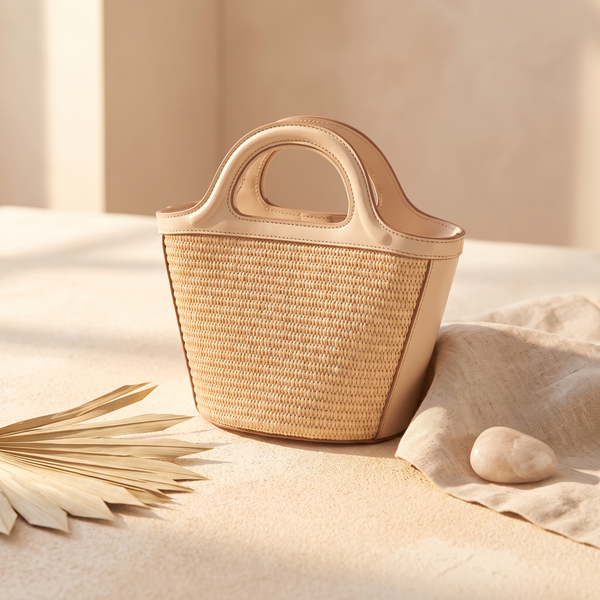
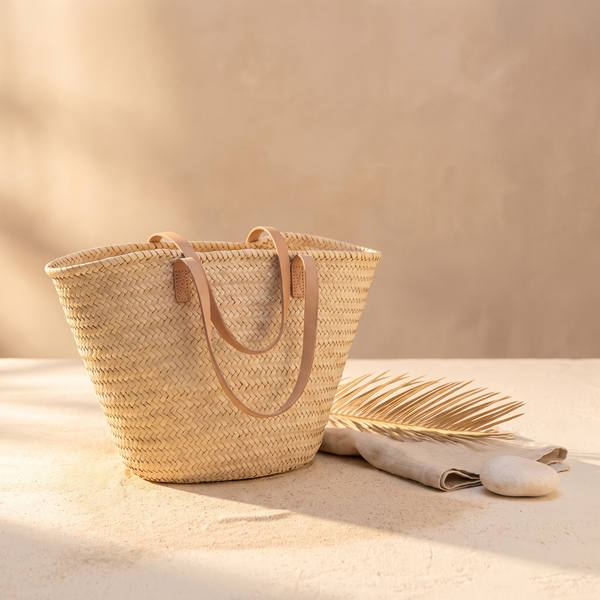
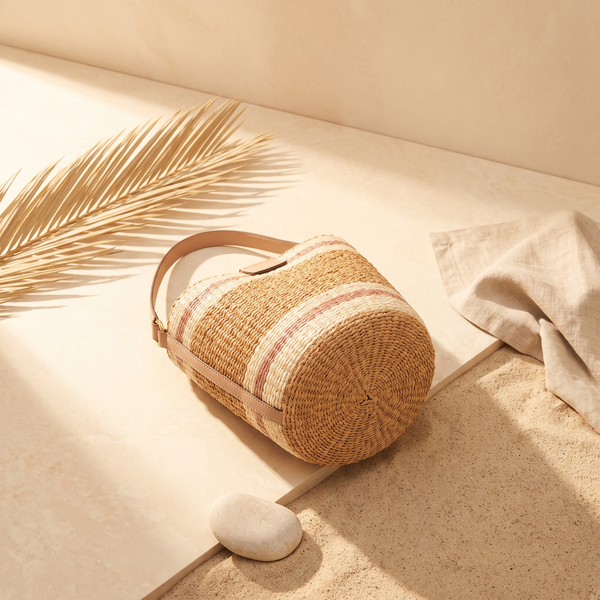
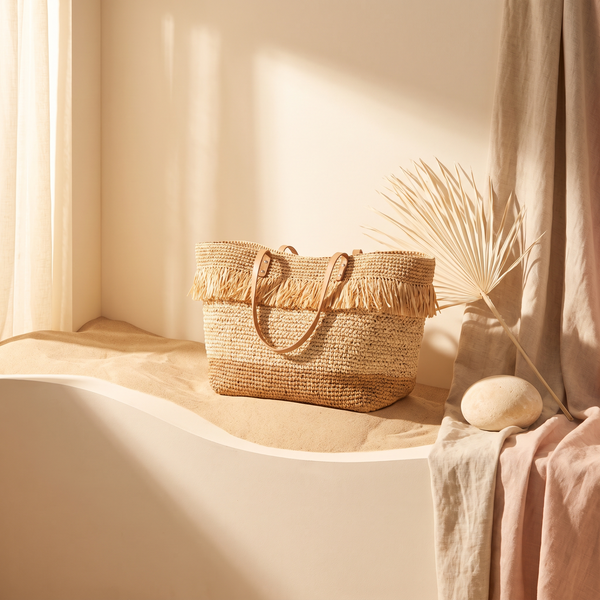
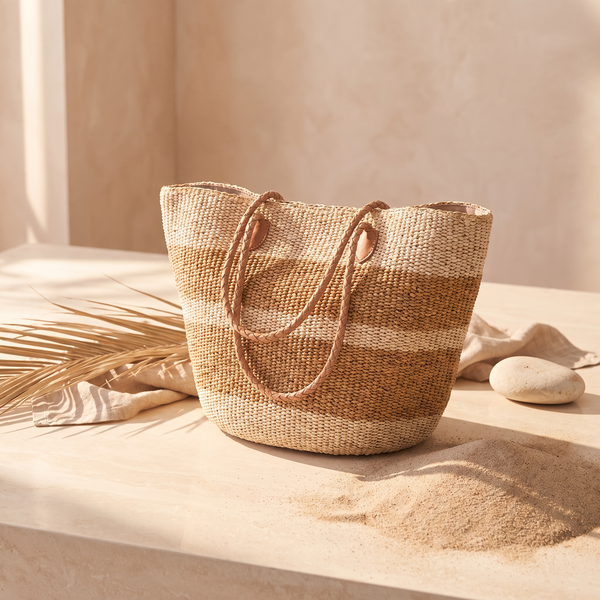
Raffia is a natural fiber made from the leaves of the raffia palm, a tree native to Madagascar and tropical Africa. The young leaves are cut, split into long ribbon-like strands and dried in the sun, producing a fiber that is soft to the touch, flexible and surprisingly strong. That rare combination is why raffia has become the material of choice for summer's most loved woven bags.
Where raffia comes from
The raffia palm produces some of the longest leaves in the plant kingdom, up to about 80 feet. The membrane on the underside of each leaflet is peeled away in long strips, then dried naturally. The result is a matte, slightly silky ribbon that can be woven, braided or crocheted without cracking, which is what gives raffia bags their signature supple drape.

Why raffia makes the best summer bags
- Light on the shoulder: raffia weighs a fraction of leather, so even a roomy tote stays comfortable all day
- Soft but strong: the fiber flexes instead of snapping, so the bag moves with you and resists everyday wear
- Breathable texture: the open weave keeps its shape without stiffness and never feels heavy in the heat
- Ages beautifully: raffia softens and relaxes with use, gaining character rather than looking tired
- Natural and biodegradable: a renewable plant fiber with warm, sunlit tones no synthetic can copy
Raffia vs straw: what is the difference?
In fashion, "straw" is an umbrella word for many woven plant fibers, including wheat straw, seagrass, palm leaf and paper blends. Raffia is one specific fiber within that family, and generally the softest of them. The practical difference:
- Raffia is supple and slightly silky, so raffia bags drape and slouch elegantly.
- Classic straw is stiffer, so straw bags hold more rigid, structured shapes.
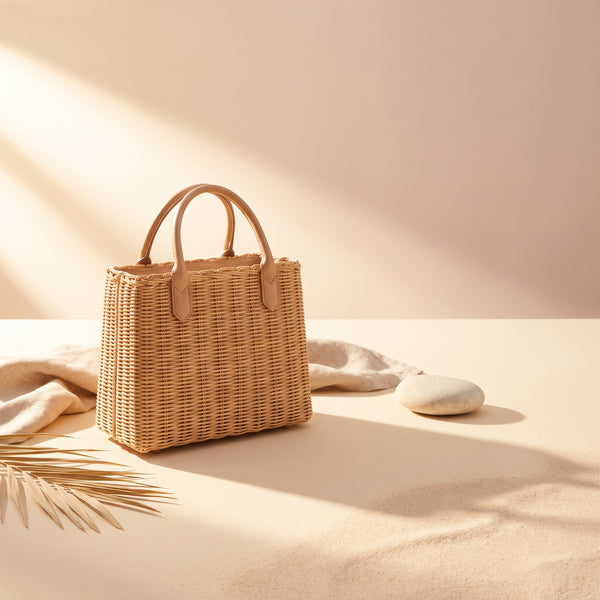
Neither is better, they simply suit different silhouettes. A relaxed shoulder bag wants raffia, a crisp basket wants straw or rattan.
Is raffia durable?
Yes, genuinely. Because the fiber bends rather than breaks, a well-made raffia bag handles daily summer life, beach, market, travel, for many seasons. The two things it dislikes are prolonged moisture and heavy overloading. Keep it dry, store it stuffed in the off-season, and it will be one of the longest-living pieces in your closet. Full routine in our straw and raffia care guide.

How to style raffia
Raffia's warm neutral works with everything, which is exactly why stylists reach for it. The easiest formulas:
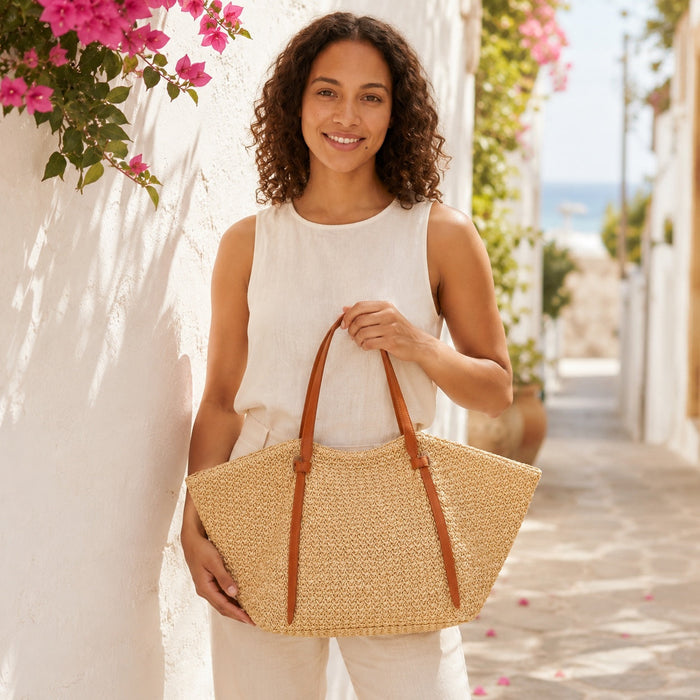
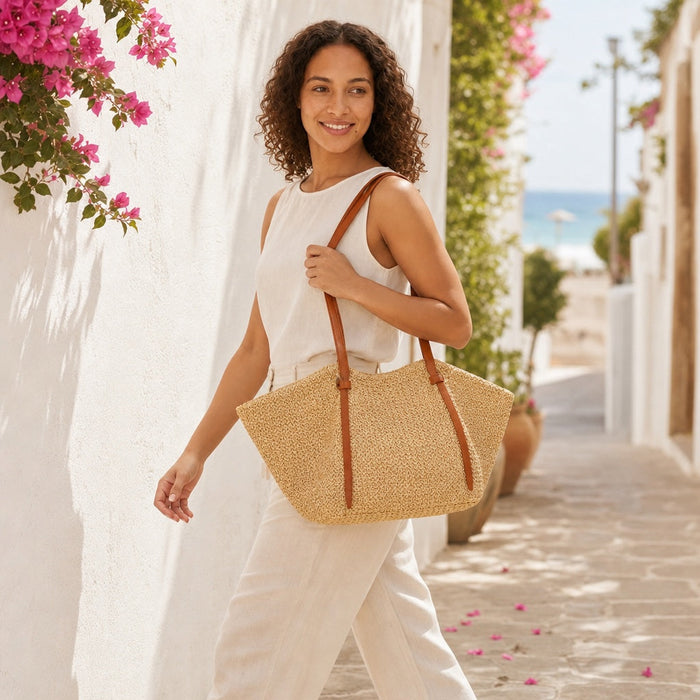
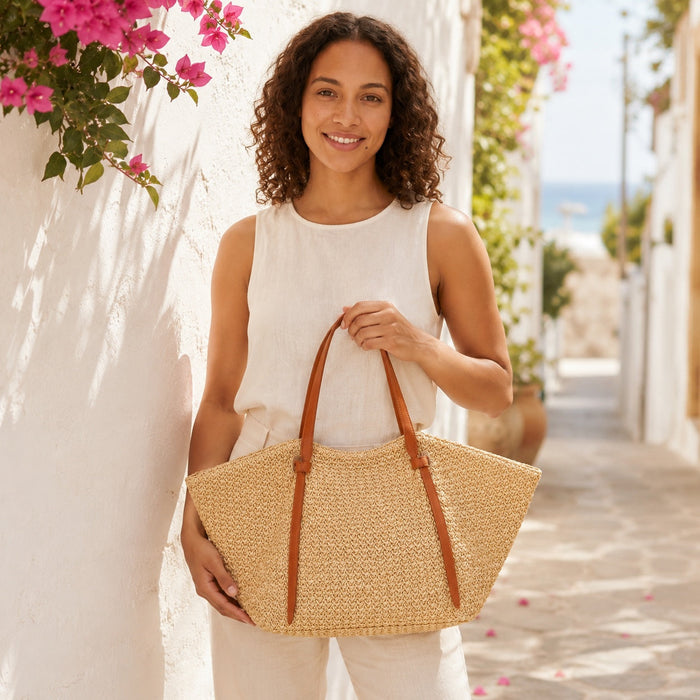
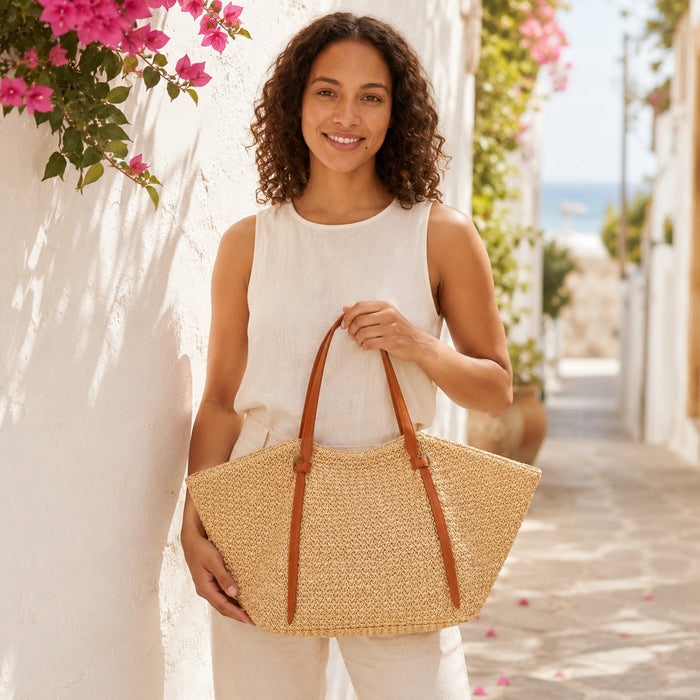
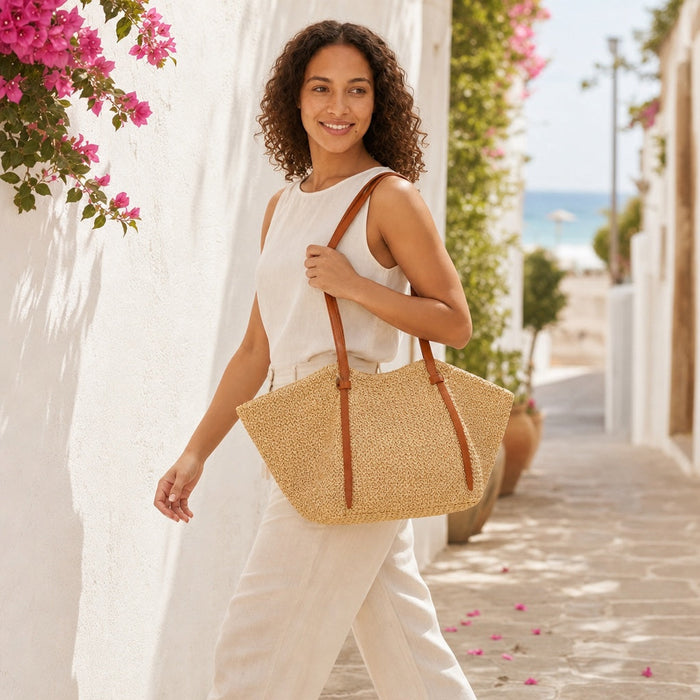
- White linen dress + raffia tote + flat sandals, the eternal vacation look
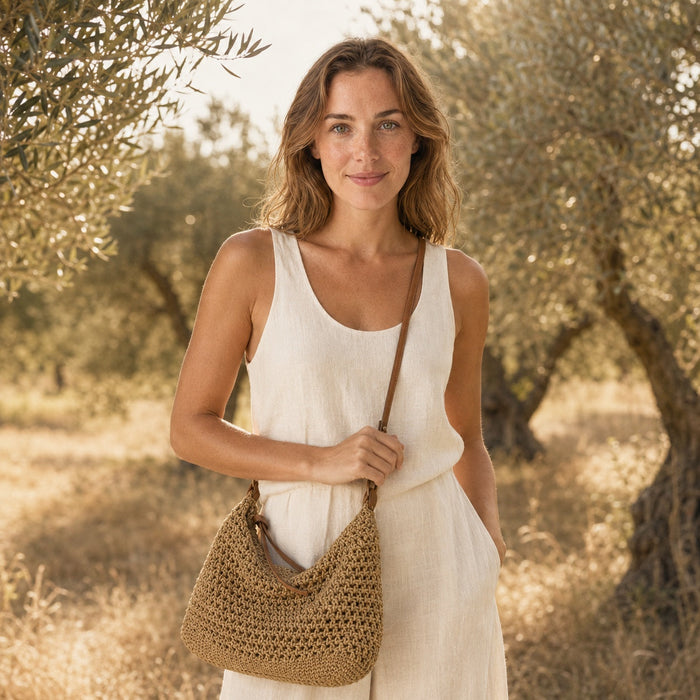
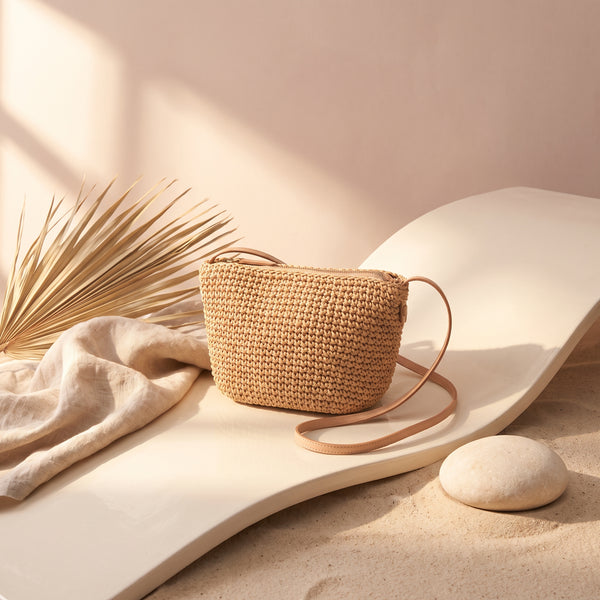
- Denim + white shirt + raffia crossbody for effortless city summer
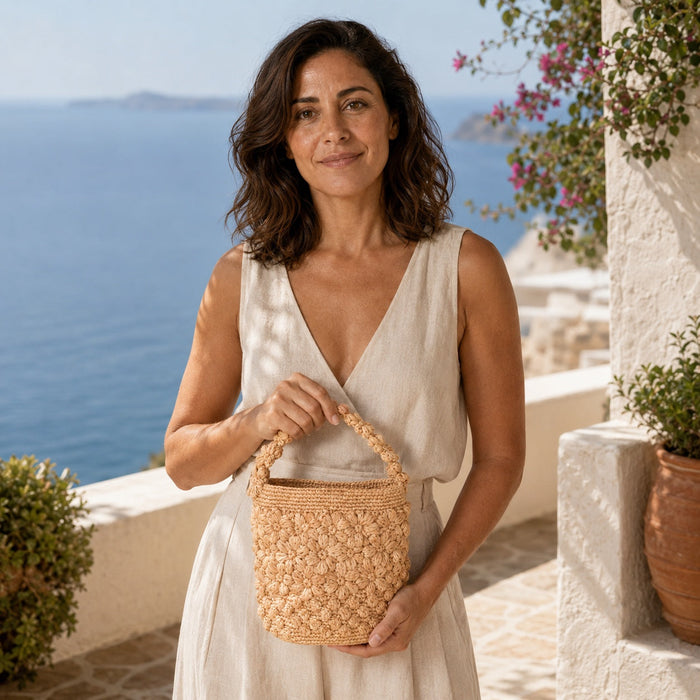
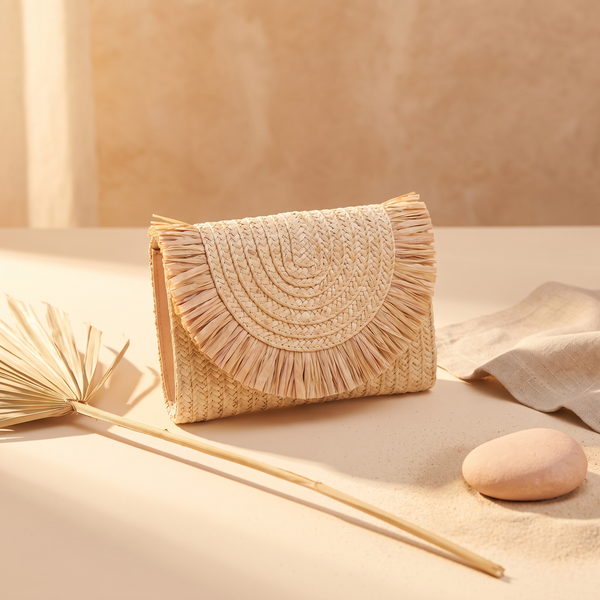
- Slip dress + woven clutch for golden-hour dinners and weddings
Your questions, answered
Is raffia waterproof?
No natural fiber is. Raffia handles a splash without drama, just let it air dry fully. Avoid soaking it or leaving it in the rain.
Why are raffia bags often expensive?
Weaving raffia is slow, skilled work, and quality fiber costs more than synthetics. Designer versions often reach several hundred dollars. Our raffia collection delivers the same look and material at an accessible price.
Does raffia shed or scratch?
Good raffia is smooth and soft against skin and clothes. A new bag may release a stray fiber or two at first, which is normal and stops quickly.